
Contacts
DEMO CENTRE

Compressed Sensing for Electron Microscopy: Highlights of 2025

Prof Nigel Browning Founder SenseAI

Foreword by Professor Nigel Browning

This is a great opportunity for us to take a brief end of year pause and look back on some of the huge achievements that have been made in sparse-sampled imaging over the last 12 months. 

Across the market, we are seeing a clear increase in both the number of distinct microscopy methods that can be positively impacted by sparse sampling and the number of engineering and biomedical applications for which sparse sampling is now essential to produce the highest spatial and temporal resolution analyses. 

As the number of SenseAI applications grow, we have significantly expanded the number of core microscopes and third-party detectors that we integrate with, leading to plug and play installations and training that can be completed in under a day with no hardware modifications – with many more detectors and imaging/spectroscopic methodologies coming in 2026.

None of this could have been accomplished without the exceptional scientists who have engaged with SenseAI Vision and embarked on their sparse sampling journey.  Our ambition for the new year is to continue to provide world leading experimental capabilities and software support to these pioneers, and to extend the sparse sampling community into exciting new instruments, applications and locations.  We hope that you will join us.

This review looks back at just some of the key developments in compressed sensing over the last 12 months, from both our own technology at SenseAI and industry leaders seeking faster, lower-dose imaging.

SenseAI took 4D STEM imaging live

M&M2025 saw the official launch of the SenseAI 4D STEM product.  The software uses a form of compressed sensing and dictionary learning to perform 4D STEM live, with significantly less beam exposure and using less than 10% of the data. 4D Scanning Transmission Electron Microscopy (4D-STEM) has long been regarded as one of the most powerful but challenging techniques in electron microscopy, limited by complex workflows, instability (drift), beam damage, slow frame rates, vast data sizes, and a lack of pre-acquisition surveying, so this was a huge advancement for EMs performing 4D STEM experiments.

Radboudumc imaged 4x faster with a quarter of the dose

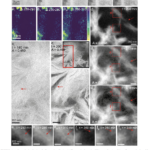
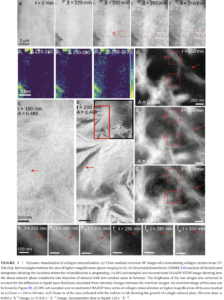
SenseAI was used by the Electron Microscopy team at Radboudumc to generate high-resolution images, using a much lower dose. In recent work with collagen fibrils, SenseAI generated the same quality image as a full-dose image, but with just a fraction of the electron dose.

Dr Luco Rutten, a post-doctoral researcher at Radboudumc said: “We achieved exactly the same resolution, using just a quarter of the dose. This supercharges our research as well as speeding up the experiments by 4x”.

“We have also used the compressed sensing technology from SenseAI for full-sample TEM denoising in 3D as a post-processing tool and the dictionary learning and inpainting are able to significantly improve the quality and usability of the images”

King’s College London reduced their field of view by 75% to overcome beam sensitivity

The Centre for Ultrastructural Imaging (“CUI”) is the central electron microscopy unit at King’s College London, one of the leading EM hubs in Europe for life sciences. It has expertise in life science and biological samples using Cryo-FIB (Focused Ion Beam for cryogenically prepared samples). The major challenges they encounter are mostly relating to charging artifacts and sample stability and this year they achieved new levels of imaging.

Professor Roland Fleck, Director of Centre for Ultrastructural Imaging says: “Our work is extremely beam sensitive. If you put too much dose in, you will de-vitrify your sample. So as a result, it’s a challenging sample to work with.

“The compressed sensing approach by SenseAI essentially acquires smaller data volumes, which helps with the post processing of data. But one of its major advantages is if I’m only collecting, say, 20 or 25% of the field of view, I’m essentially working four or five times faster. So, the time required to complete an entire volume is significantly reduced, which is less stressful on the sample, less stressful on the instrument, less stressful on the operator, and generates much higher success rates.”

CNR-IMM reduced data volumes to just 10%

In 2025, using SenseAI, the CNR Institute for Microelectronics and Microsystems (CNR-IMM), one of Europe’s leading semiconductor research labs, achieved a faster alignment with a lower electron dose, using 10% of the original data. They rapidly test different parameters to get the maximum output from their analysis, crucial for any semiconductor laboratory.

Giuseppe Nicotra, Head of Sub-Ångstrom Electron Microscope LAB at CNR-IMM says: “We can now perform analysis across SEM, 2D and 4D-STEM in real time. There’s nothing worse when you acquire a 4D-STEM data set and then you’re unable to know how good it is until you’ve processed and analysed it, and then have to re-acquire the datasets. This is a lengthy process consuming huge amounts of data. With SenseAI you can see 4D-STEM images live and make adjustments on the fly.

New York Structural Biology Center increasing data quality

SenseAI was installed at NYSBC on both on both their Thermo Fisher Scientific Krios for doing 4D-STEM and the Thermo Fisher Scientific Hydra for doing volume SEM – both for biological materials research. They’re investigating new methods for increasing data quality and throughput for both platforms. 

Arizona State University carried out live in-situ TEM

SenseAI have worked with Professor Peter Crozier at Arizona State University to enable real time TEM video denoising. SenseAI can boost SNR by over 30dB, enabling real time feedback on the field-of-view and alignment of the microscope whilst performing in-situ TEM experiments. 

Elsewhere in the industry

There have been significant advances from many other manufacturers and software companies across the globe.

JEOL has been driving forward their Dose Painting to create precise exposure patterns by synchronizing an electrostatic blanker to a STEM scan.

Another groundbreaker in 2025 was from Thermo Fisher Scientific. The Thermo Scientific™ Iliad™ Ultra (S)TEM is an excellent solution for characterizing the most complex and challenging materials.

Two new products emerged from TurboTEM this year: Pulse and Tempo. Together, this complementary hardware suite reshapes data collection by introducing a novel timing and synchronization approach that reduces distortions, enhances measurement accuracy, and preserves low-dose operating conditions.Tescan – 4D STEM combing signals

The Tescan Tensor advanced the field in 2025 with its fully integrated 4D-STEM platform. Its coordinated detector architecture captures rich diffraction datasets with exceptional stability and merges them seamlessly with complementary techniques such as EDS, enabling multimodal measurements that reduce scan-induced artifacts, enhance quantitative precision, and maintain gentle dose conditions suitable for even the most beam-sensitive materials.GitHub/Open Source

TEMAgent was introduced this year as a way of leveraging LLMs to automate procedures in microscopy control. This work comes from the NCEM at LBL, which also released BEACON, a tool for automating microscope alignment. Py4DSTEM continued to be a community favourite for processing 4D-STEM data, however PtyRAD was released out of the Cornell Group which is focused on making ptychography reconstructions scaleable. PtyRAD optimizes many parameters simultaneously giving much greater flexibility and accuracy than older ad-hoc ptychography codes.

Notable papers

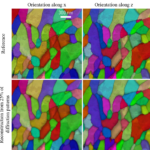
Broad et al. (University of Liverpool, SenseAI, Rosalind Franklin Institute) published in the Journal of Microscopy work investigating the application of compressive sensing to EBSD imaging modalities, demonstrating proof of concept data processing methodologies.

Atindama et al. (Clarkson University, University of Michigan, Middlebury College, NIST) presented a novel hybrid algorithm designed specifically to inpaint EBSD maps, including comparisons with other community standards. 

Smith et al. (Oak Ridge National Laboratory, Georgia Institute of Technology, Duke University) demonstrated a selective-sampling compressive sensing workflow for 4D-STEM, accelerating the imaging of interfaces, surfaces, and defects.