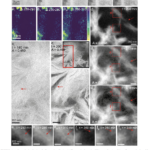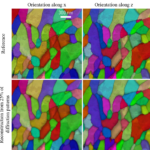

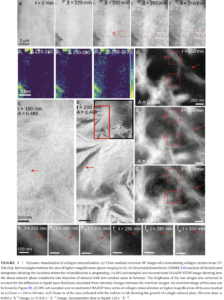
 SenseAI user Radboud University Medical Center has had a paper published, featuring our software. The paper ‘Dynamic Observation of Lacy Pattern Formation in a Bone Tissue Model Using Liquid Phase Scanning Transmission Electron Microscopy’
Researchers at the Electron Microscopy Center at Radboud University Medical Center utilised SenseAI’s subsampling and inpainting techniques to perform electron-dose-sensitive, time-resolved scanning transmission electron microscope imaging of bone undergoing mineralisation. Low electron doses are necessary to ensure that the sensitive material structure remained unaltered during imaging. This enabled the first dynamic nanoscale observation of collagen mineralizationin hydrated bone tissue sections.
The low-dose LP-STEM workflow will be a powerful tool for understanding the dynamics of biological mineralization processes and has great potential for future nanoscale studies of biological material formation processes in their native context.
Huge congratulations to the team at the Radboud Electron Microscopy Center on this major advancement.